
Planning a trip should feel exciting, not exhausting. Yet most of us fall into the same black hole: opening twenty browser tabs, bookmarking fifty conflicting recommendations, and still feeling lost. The solution is simpler than you think. You do not need more information. You need a system. A foolproof travel guide is not a list of every attraction in a city. It is a personalized, filtered, and sequenced plan that matches your pace, budget, and interests. In this guide, I will show you exactly how to build that system from scratch, using a real example from a recent trip to Lisbon.
Why most travel guides fail you right from the start. Traditional travel guides—whether blogs, videos, or printed books—are written for an average reader who does not exist. They include “must-see” sights that may bore you, restaurant recommendations that are already outdated, and walking routes that ignore how tired you will be by 4 PM. The real problem is not bad information. It is information without context. You need a guide that adapts to you, not the other way around.
The principle behind a foolproof travel guide is what I call the “Three-Layer Filter.” Layer one is logistics: flights, visas, weather, and safety. Layer two is daily rhythm: how much walking, how many museum hours, how much unstructured time. Layer three is personal highlights: your top three non-negotiable experiences. Most people start with layer three and ignore layers one and two. That is why their trips feel rushed or disappointing. Always build from the bottom up.
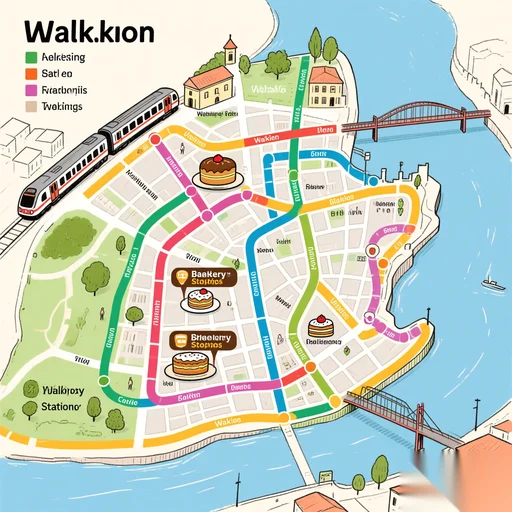
Let me show you the step-by-step method. Step one: write down your non-negotiable experiences. Only three. For my Lisbon trip, they were: listen to live fado in Alfama, eat a pastel de nata from the original Belém bakery, and ride Tram 28 from start to end. That is it. Step two: open a single map app and drop three pins for those highlights. Step three: around each pin, add one breakfast spot, one lunch spot, and one “rest break” location—a park, a quiet square, or a coffee shop. Step four: connect the pins using public transport or walking routes, but never plan more than three “must-do” activities per day. Everything else is a bonus. Step five: for logistics, create a separate checklist. I use a simple note with five items: passport, local currency, offline map, power adapter, and a photocopy of my ID.
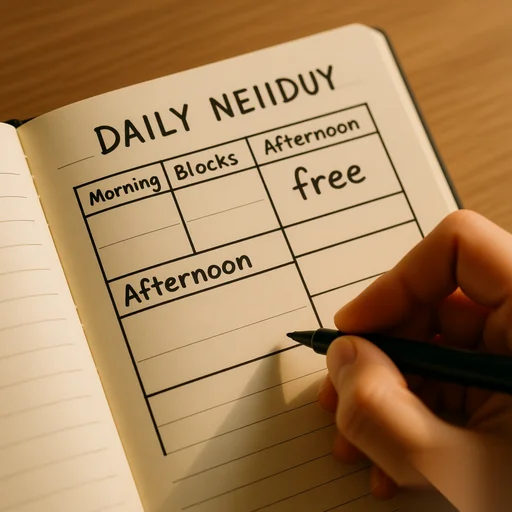
Now here is the counterintuitive part. A foolproof travel guide always includes “planned nothingness.” That means two to three hours per day with zero scheduled activities. Why? Because the best travel memories—a random street musician, a sudden view, a local festival—happen in unscheduled time. If you fill every hour, you kill serendipity. In my Lisbon guide, I left every afternoon from 3 PM to 6 PM empty. That freedom let me stumble into a tiny bookstore in Chiado and a rooftop sunset I still remember two years later.
Let me walk you through a real case example. I built a three-day Lisbon guide using this method. Day one: morning in Belém for the pastel de nata and Jerónimos Monastery. Then a 15-minute tram ride back to the center. Afternoon free. Evening: booked a fado show at 8 PM in Alfama. Day two: morning ride of Tram 28 from Martim Moniz to Campo Ourique. Got off halfway to explore Graça. Afternoon free. Evening: casual dinner in Time Out Market. Day three: morning visit to São Jorge Castle, then walked down to the river. Afternoon free. Evening: packed and left. That is it. No cramming, no rush, and I saw everything that truly mattered.
What about unexpected closures or bad weather? A foolproof travel guide always has a “swap list.” For each planned activity, write down one alternative nearby. If Tram 28 is too crowded, walk parallel streets. If it rains, swap the castle visit for the Oceanarium. This small habit removes 90% of travel anxiety. I keep my swap list in the same note as my logistics checklist.
You might be thinking: this sounds too simple. Does it really work for group travel or family trips? Yes, but with one adjustment. For groups, each person writes their own top-three list. Then you overlay them. Anything that appears on two or more lists becomes a shared must-do. Everything else becomes optional solo time. This stops the endless negotiation that ruins group trips. For families, build two versions of the day: one adult-paced and one kid-paced. Then find overlaps. Almost every city has a park, a funicular, or a market that works for both.
The final piece is the post-trip upgrade. After you return, spend ten minutes annotating your guide. What took longer than expected? What was overrated? What hidden gem did you find? Save this annotated version. Next time you travel to a similar city—say, another hilly European capital—you can reuse the same rhythm. Over time, you build a personal travel template that works better than any published guide.
Stop searching for the perfect travel guide. Start building your own. It takes less than an hour, reduces decision fatigue, and leaves room for magic. Try the Three-Layer Filter on your next weekend trip, even just for one day. You will be surprised how much better travel feels when you are not following someone else’s list.
(I used this method for a 10-day Italy trip and it saved my sanity. No more fighting over itineraries with my partner. We just followed the “top three each” rule and had zero arguments. Thank you!)
(I’m a solo traveler and I’ve always overplanned. This “planned nothingness” idea is genius. I tried it in Barcelona and my best afternoon was just wandering the Gothic Quarter. Definitely adopting this.)
(What about budget travel? Does this work if you can’t afford spontaneous cafes or last-minute shows? – Yes, you can swap the “free time” with free parks, self-guided walks, and pre-booked free museums. The principle still works.)
(I wish I had read this before my Tokyo trip. I packed 8 things per day and was exhausted by day 2. Next time I’m using the swap list for rain. Great practical advice.)
(Finally a travel guide that admits most blogs are noise. The map-and-three-pins method is so obvious but I’ve never done it. Just tested for a Vienna trip and I already feel calmer.)
Build a personalized travel guide in 5 steps using the Three-Layer Filter. Stop overplanning and leave room for real memories.
FINISHED旅行指南文案生成




I used this method for a 10-day Italy trip and it saved my sanity. No more fighting over itineraries with my partner. We just followed the “top three each” rule and had zero arguments. Thank you!
Finally a travel guide that admits most blogs are noise. The map-and-three-pins method is so obvious but I’ve never done it. Just tested for a Vienna trip and I already feel calmer.
What about budget travel? Does this work if you can’t afford spontaneous cafes or last-minute shows? – Yes, you can swap the “free time” with free parks, self-guided walks, and pre-booked free museums. The principle still works.
I wish I had read this before my Tokyo trip. I packed 8 things per day and was exhausted by day 2. Next time I’m using the swap list for rain. Great practical advice.
I’m a solo traveler and I’ve always overplanned. This “planned nothingness” idea is genius. I tried it in Barcelona and my best afternoon was just wandering the Gothic Quarter. Definitely adopting this.