
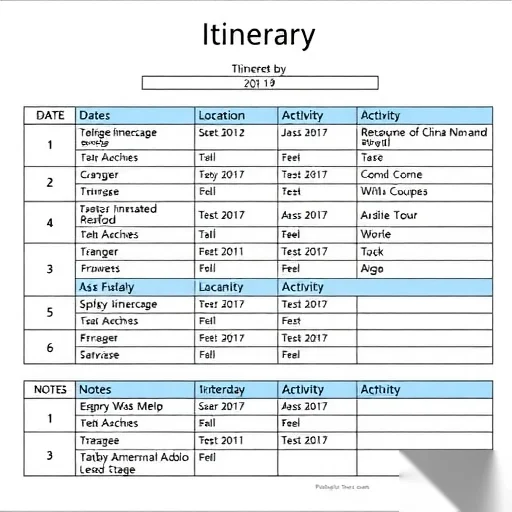
Creating a travel itinerary table is an essential step in planning a smooth and enjoyable trip. Whether you’re traveling for leisure, business, or adventure, having a clear and organized itinerary can help you save time, avoid stress, and make the most of your journey. The key to a successful travel plan lies in organizing your trip details into a structured table, which allows you to track your schedule, budget, and activities efficiently. This article will guide you through the process of creating a travel itinerary table, from understanding its purpose to applying it in real-world scenarios.
A well-designed travel itinerary table should include all the necessary details about your trip, such as dates, locations, activities, transportation, accommodation, and budget. It’s not just a list of events but a comprehensive tool that helps you visualize your entire trip in one place. By breaking down your journey into manageable segments, you can ensure that you don’t miss anything important and that your plans are realistic and achievable.
The first step in creating your travel itinerary table is to determine the purpose of your trip. Are you going on a short weekend getaway or a long-term adventure? What are your main goals—relaxation, sightseeing, networking, or exploration? Understanding your travel goals will help you prioritize your activities and allocate your time and resources accordingly. Once you have a clear idea of what you want to achieve, you can start building your table with the necessary information.
Next, decide on the structure of your table. A basic travel itinerary table typically includes columns such as Date, Location, Activity, Transportation, Accommodation, and Notes. You can customize the table based on your specific needs. For example, if you’re planning a multi-city trip, you might add a column for each city or include a separate section for each day. You can also add additional columns for budget tracking, meals, and travel tips. The key is to keep the table simple and easy to read, so you can refer to it whenever needed.
When creating your table, it’s important to be realistic and flexible. While it’s great to have a plan, unexpected changes can happen, such as weather disruptions, flight delays, or last-minute changes in your schedule. By leaving some space for flexibility, you can adapt to these changes without feeling overwhelmed. For instance, you can add a column for “Notes” to jot down any last-minute updates or reminders. This will help you stay on track while also allowing room for spontaneity.
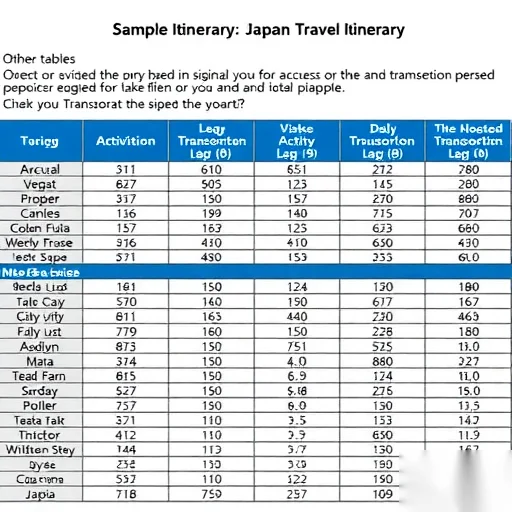
To illustrate how a travel itinerary table can be used, let’s consider a sample case. Imagine you’re planning a 7-day trip to Japan. You can start by listing the dates of your trip and then break it down day by day. Each day can include the location you’ll be in, the main activities you plan to do, how you’ll get there, where you’ll stay, and any additional notes. For example, on Day 1, you might arrive in Tokyo and spend the day exploring the city, while on Day 3, you could travel to Kyoto and visit historical temples. By organizing your trip this way, you can ensure that you’re making the most of your time and not missing out on any key experiences.
Another useful tip is to include a budget column in your table. This will help you track your expenses and stay within your financial limits. You can list your estimated costs for accommodation, meals, transportation, and activities, and then compare them with your actual spending. This not only helps you manage your money better but also gives you a clear overview of where your money is going. If you find that you’re overspending in one area, you can adjust your plans accordingly.
In addition to tracking your activities and expenses, your travel itinerary table can also serve as a communication tool. If you’re traveling with a group or a family, sharing your itinerary can help everyone stay on the same page. It can also be useful for informing your employer or friends about your travel plans, especially if you need to take time off work. By keeping your itinerary organized, you can ensure that everyone is aware of your schedule and that there are no misunderstandings.
Creating a travel itinerary table is not just about planning your trip—it’s about making your journey more enjoyable and stress-free. By organizing your details in a clear and structured way, you can focus on the experiences you want to have rather than worrying about the logistics. Whether you’re a seasoned traveler or someone who’s never planned a trip before, a well-designed itinerary table can make all the difference in your travel experience.




This guide seems really helpful for organizing my upcoming trip. I’ve always struggled with planning my schedule, so having a table format might make it easier.
I’m glad I came across this article. It’s exactly what I needed to start planning my dream vacation without getting overwhelmed.
The simple solution mentioned here could save me a lot of stress. I’ll definitely try creating a travel itinerary table as recommended.