
The straightforward answer is that Zhongying Street (Chung Ying Street) in Shenzhen’s Yantian District is not a typical tourist attraction—it’s a living border that requires a special permit, a dose of historical context, and a willingness to see how a single street embodies the complex relationship between Hong Kong and mainland China. Most visitors make the mistake of treating it as a shopping trip, focusing only on the duty‑free shops on the Hong Kong side, and leaving without understanding the layered history that makes this place significant. The solution is to apply for your border permit in advance, arrive early to beat the crowds, and spend time walking the full length of the street, taking in the museum, the boundary markers, and the quiet side lanes that tell the story of a divided village.
The biggest mistake is assuming you can wander in without preparation. Access to Zhongying Street requires a special Border Pass (available to mainland and international visitors with valid identification), and the application process can take a day or two. Another common error is going on a weekend or holiday, when the narrow street becomes packed with shoppers and the experience feels more like a crowded market than a historical site. The principle is simple: go on a weekday, arrive when the gates open, and give yourself time to absorb the history before the shopping crowds descend.
Start by securing your permit. Zhongying Street is located within the **Shatoujiao Border Special Management Zone**. Visitors need to obtain a Border Pass, which can be applied for at the entrance using your passport or mainland ID. The process involves filling out a short form and waiting for verification; allow 30–60 minutes on busy days. Permits are typically issued for the same day and allow you to walk the main street. There is a small entry fee.
Once inside, begin at the **Zhongying Street History Museum**, located at the mainland end of the street. The museum tells the story of how this street became a border after the Opium Wars, with British territory on one side and Chinese on the other. Exhibits include photographs, boundary markers, and personal accounts of families who lived on the divide. The museum is small but essential for understanding what you’re about to walk.

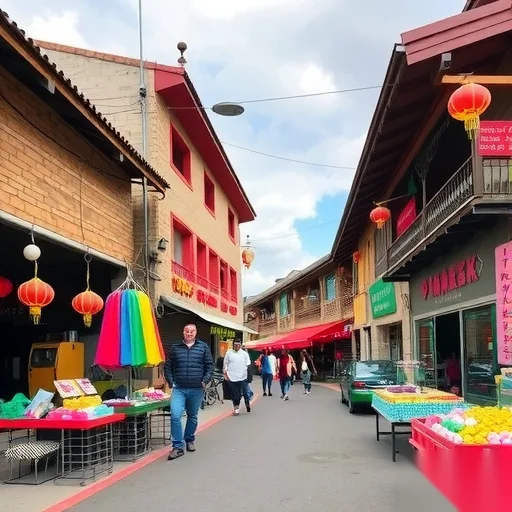
Walk the length of the street slowly. It’s just over 200 meters long, but the significance is in the details. Look for the **boundary stones** embedded in the pavement—they mark the exact line where British territory ended and Chinese territory began. The street itself is lined with shops, but the real interest is in the older buildings on the Hong Kong side, where the architecture still reflects the colonial era. At the far end, you’ll reach a gate that marks the actual border; beyond it, the Hong Kong side continues as a residential area, but visitors are not permitted to pass without Hong Kong entry clearance.
After walking the main street, explore the **surrounding lanes** on the mainland side. The **Wutong Mountain** area just behind the street has a few small temples and a pleasant park. The **Shatoujiao neighborhood** itself is a quiet residential district with local eateries serving Hakka cuisine—a good place for lunch after your visit.

A concrete example: a traveler I know visited on a Tuesday morning. She arrived at the permit office at 9:00 AM, had her pass within 30 minutes, and spent the first hour in the museum. She walked the street slowly, stopping to read the historical plaques and photograph the boundary stones. By 11:00 AM, the shopping crowds were beginning to thicken, so she moved to the side lanes, had a bowl of Hakka noodles at a small restaurant, and walked through the nearby park. She was out by early afternoon, having experienced the historical site without the stress of the weekend crush.
Logistics: Zhongying Street is accessible by metro from Shenzhen; take Line 8 to **Shatoujiao Station**, then walk about 10 minutes to the permit office. Bring your passport or ID, and expect a short wait for the permit process. The site is open daily, but weekdays are significantly quieter. Wear comfortable shoes; the street is paved but can be crowded. The shops on the Hong Kong side accept Hong Kong dollars, but mainland currency is also widely accepted; cards are less common, so bring cash.
[The museum is a must. Without it, the street just looks like a shopping alley. The photos and stories of the families who lived on the border make you see the place differently. I went on a weekday morning and had the museum almost to myself. Highly recommend going early.]
[I’ve been twice—once on a weekend and once on a weekday. The difference is night and day. Weekend is a shopping frenzy; weekday you can actually walk at a normal pace and see the historical markers. The boundary stones are easy to miss if you’re not looking; they’re worn into the pavement. Worth the trip for the history alone.]
[The Hakka food in the side streets is excellent. After the crowds started to build, I ducked into a small restaurant and had a fantastic meal. The neighborhood behind the street is quiet and gives a sense of everyday life that contrasts with the border’s history. A good reminder that this is still a living community.]
[I was surprised by how emotional the street felt. Standing on the line where the border used to be, thinking about the families separated by it, was powerful. The museum does a good job of telling those personal stories. A unique place, well worth the permit process.]
Zhongying Street requires advance planning for a border permit; visit on a weekday, start at the history museum, walk the narrow street slowly to find the boundary stones, then explore the surrounding Hakka neighborhood for a fuller understanding of this divided village’s past and present.
#ZhongyingStreet##ShenzhenHistory#FINISHED
Visiting Zhongying Street? Here’s How to Navigate the Border Town’s Unique History


weekday you can actually walk at a normal pace and see the historical markers. The boundary stones are easy to miss if you’re not looking
I’ve been twice—once on a weekend and once on a weekday. The difference is night and day. Weekend is a shopping frenzy
The museum is a must. Without it, the street just looks like a shopping alley. The photos and stories of the families who lived on the border make you see the place differently. I went on a weekday morning and had the museum almost to myself. Highly recommend going early.
The Hakka food in the side streets is excellent. After the crowds started to build, I ducked into a small restaurant and had a fantastic meal. The neighborhood behind the street is quiet and gives a sense of everyday life that contrasts with the border’s history. A good reminder that this is still a living community.
they’re worn into the pavement. Worth the trip for the history alone.