

If you are searching for a travel experience that blends ancient maritime history, living temples, and some of the most authentic street food in southern Fujian, the answer is Quanzhou. Forget the crowds of Xiamen. This city, once the starting point of the Maritime Silk Road, offers a compact, walkable core packed with UNESCO World Heritage sites, and this guide will show you exactly how to tackle it in three days without feeling rushed.
Many travelers overlook Quanzhou because they simply do not know what is there. The problem is not a lack of attractions but an overwhelming density of them. Within a two-kilometer radius of the old city, you will find a 1,300-year-old mosque, a Taoist temple with a giant stone Laozi, a Hindu temple with Chinese dragons, and a stunning Confucian temple. The confusion usually starts when visitors try to see everything at once without a clear route. You might end up walking in circles or missing the small alleyways where the real charm hides.
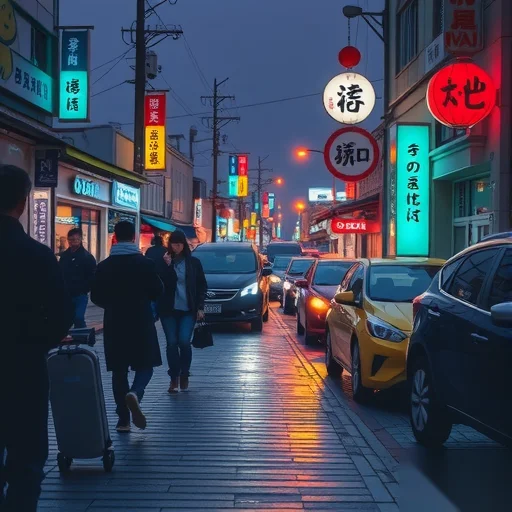
To solve this, think of the old city as a living museum shaped like a turtle shell. The core principle is simple: focus on one main north-south axis and branch out into the小巷 (small lanes) only during specific hours. The best time to start is 8:00 AM from the southern landmark, Deji Gate. From there, you walk north along Zhongshan Road, which is a historic arcade street. The morning light is perfect for photos, and the shops open slowly, giving you a glimpse of daily life. The key is to resist the urge to take every side street immediately. Save your energy.
Here is the step-by-step plan. On day one, begin at Kaiyuan Temple. This is non-negotiable. It is the largest Buddhist temple in Fujian, and its twin pagodas are the symbol of Quanzhou. Spend at least one hour here. Pay attention to the flying-angel statues at the base of the pillars—they show Indian and Persian influences. After the temple, exit from the west gate and immediately turn right into Pei Xiang Alley. This narrow lane is where you will find local breakfast stalls selling noodle soup and peanut soup. Grab a bowl.
Next, walk fifteen minutes to the Qingjing Mosque. It looks like a ruin from the outside, but it is an active mosque built in 1009. The white granite and straight lines are a sharp contrast to the red-brick temples. From there, head east to Guanyue Temple. Do not let the small entrance fool you. This temple dedicated to Guan Yu is a riot of colorful ceramic figures on its rooftops. Take photos from the street corner. Then cross the road to the Confucian Temple, which has a peaceful courtyard perfect for a mid-day break.
Day two is for the maritime museum and the waterfront. In the morning, take a short taxi ride to the Quanzhou Maritime Museum. This is where you understand why Marco Polo called this city one of the greatest ports in the world. See the recovered ship from the 13th century and learn about Admiral Zheng He. Do not skip the foreign cemetery section. It proves how diverse this city was. After lunch, visit the Mazu Temple at Tianhou Palace. Mazu is the goddess of the sea, and this is her most important temple in the region. The stone carvings on the pillars are original from the Song Dynasty. In the afternoon, walk to the nearby Deji Gate ruins. It is not much to see above ground, but the glass floor lets you see the original port foundations.
Day three is for the suburban sites. Take bus K602 to Qingyuan Mountain to see the Stone Laozi. It is a giant carving of the philosopher, sitting on the mountain since the Song Dynasty. The hike up is gentle and takes about forty minutes. On your way back, stop at the Southern Shaolin Temple. It is a modern reconstruction, but the kung fu demonstrations at 10:00 AM and 3:00 PM are authentic and thrilling.
Now let me give you a concrete case example. My friend Sarah, a history teacher from London, followed this exact route last November. She made two mistakes that you can avoid. First, she tried to eat at tourist restaurants near Kaiyuan Temple. Those places are overpriced. Instead, I told her to walk one block north to a small shop on Xijie selling “Mianxianhu” (thin noodle paste) with oysters. She paid eight yuan. Second, she originally planned to take a taxi between all sites. That is a waste. The old city is flat and walkable. Once she started walking the alleys, she found a tiny Hindu stone pillar built into a residential wall, completely unnoticed by tour groups. That became her favorite memory.
For food, you must try beef soup from the Muslim quarter. Look for a shop called “Good Brothers Beef” on Tumen Street. Their stewed beef with ginger is legendary. Also, try “full orange” candy, which is preserved winter melon shaped like oranges. It is sold everywhere but the best is from a family shop on Zhongshan Road that has been making it for 150 years. Do not forget the “oyster omelet” from the night market near Zhongshan Park. It is greasy, salty, and perfect.
A practical note on transport. The city now has a light rail line connecting the high-speed rail station to the old city. Take Line 1 to “Tianhou Temple Station.” Buy a transit card at any convenience store for ease. For accommodation, stay within the old city walls near Zhuangfu Alley. This area has many traditional courtyard hotels turned into guesthouses. You will hear morning temple bells, and the neighbors will smile at you.
Finally, respect the local culture. Do not climb on the stone statues at the mosque. Dress modestly when entering any active temple. Quanzhou people are proud but reserved. A simple nod and a smile go a long way. Avoid visiting during the first week of May or October. The crowds are terrible. The best months are November to March, when the sky is clear and the temperature is cool enough for all-day walking.
(Just came back from Quanzhou last week. This guide is spot on. I missed the Hindu stone pillar but found a Persian inscription on a random house wall. The beef soup at Good Brothers is a must.)
(I am Chinese and lived in Quanzhou for five years. One correction: the best oyster omelet is not at Zhongshan Park but at a small stall near the south gate of Kaiyuan Temple, open only after 7 PM.)
(Thanks for including the bus number to Qingyuan Mountain. I would have gotten lost. Also, add that the Maritime Museum closes on Mondays. Learned that the hard way.)
(As someone who hates walking tours, I still loved this plan. Everything is so close together. The tip about starting at 8 AM saved me from the heat.)
Quanzhou rewards slow exploration: follow a pagoda axis, eat in side alleys, and let maritime history surprise you.
FINISHED泉州旅游指南专业文案



small lanes
thin noodle paste
I am Chinese and lived in Quanzhou for five years. One correction: the best oyster omelet is not at Zhongshan Park but at a small stall near the south gate of Kaiyuan Temple, open only after 7 PM.
Just came back from Quanzhou last week. This guide is spot on. I missed the Hindu stone pillar but found a Persian inscription on a random house wall. The beef soup at Good Brothers is a must.
Thanks for including the bus number to Qingyuan Mountain. I would have gotten lost. Also, add that the Maritime Museum closes on Mondays. Learned that the hard way.